
October 26, 2026
Guyana Water Incorporated (GWI) is advancing efforts to strengthen the monitoring and sustainable management of Guyana's groundwater resources through a knowledge-sharing initiative under the European Union-funded EuroClima Programme.
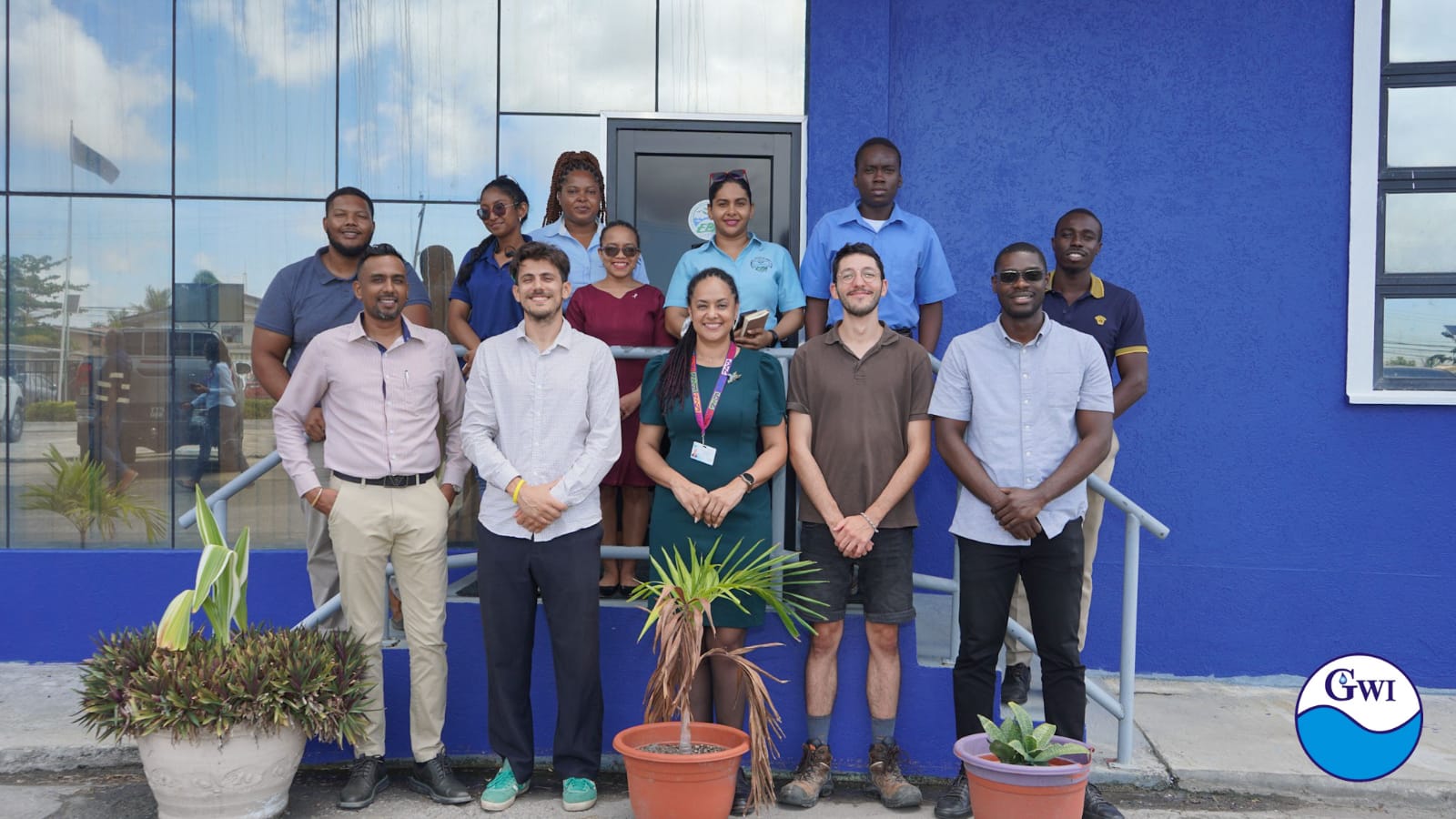
The training, which focuses on the use of data loggers, manual data retrieval and passive groundwater sampling, brought together representatives from GWI, the Environmental Protection Agency (EPA), and the Guyana Hydrometeorological Service, under the Ministry of Agriculture.
It forms part of Action 2 of the EuroClima Project in Guyana, which supports GWI's preparations to meet future water demands and strengthen the resilience of coastal water supplies.
Providing an overview of the initiative, GWI’s Hydrologist Angela Franklin explained that the project is one of three actions being undertaken in Guyana through EuroClima, alongside initiatives focused on rehabilitating mined-out areas and expanding renewable energy use.
She outlined four key components of the project: gathering and analysing existing groundwater data, improving knowledge of coastal aquifers, assessing future water demand and identifying sustainable, climate-resilient water supply solutions.
Franklin explained that the project is being executed under the Ministry of Natural Resources with funding from the European Union through its Global Gateway initiative and executed by Expertise France, with Antea Group and local partner S&PM contracted to undertake the technical works. France's Bureau de Recherches Géologiques et Minières (BRGM) also supported preliminary activities.
A major focus is the A-Sands Aquifer, part of Guyana's coastal groundwater system, which supplies water for domestic, agricultural and industrial use.
The technical presentation was facilitated by Deputy Team Leader with Antea Group, Zakaria Zamzani, and Hydrologist Vincent Raveleau. Participants were informed that Guyana's multilayer coastal aquifer system covers approximately 20,000 square kilometres and serves as a major source of drinking water for coastal communities.
The monitoring programme seeks to improve understanding of the aquifer's capacity, productivity, recharge mechanisms and response to environmental pressures.
As the project team concludes its well inventory exercise, attention is shifting towards establishing a groundwater monitoring network. Boreholes are being assessed based on their condition, geographical location, proximity to operational wells, and whether they are inactive.
The training introduced participants to equipment such as Solinst Leveloggers, which record water pressure and temperature to help monitor groundwater levels, and Barologgers, which measure atmospheric pressure to support accurate interpretation of those readings.
Participants were also introduced to equipment installation, calibration, troubleshooting and data retrieval techniques, including the use of direct-read cables and Kevlar cords, as well as passive groundwater sampling using HydraSleeve samplers.
The project includes plans to establish a monitoring network and conduct isotopic and hydrogeochemical analyses. The information collected will contribute to the development of a conceptual model of the A-Sands Aquifer, supporting more informed decisions on groundwater management.
Through this initiative, GWI and its partners are working to strengthen technical expertise, improve groundwater data collection and support the long-term sustainability of Guyana's water resources amid increasing demand and environmental challenges.
GWI was also represented by Head of Water Quality Unit, Avinash Parsram, Non-Revenue Water Coordinator, Vickram Motilall, Engineers, Jovon Johnson, and Shemaiah Gordon and Monitoring and Evaluation Officer, Jedidah Crosse.
